ByJohn A
The Benefits of Continuous Business Improvement
Introduction
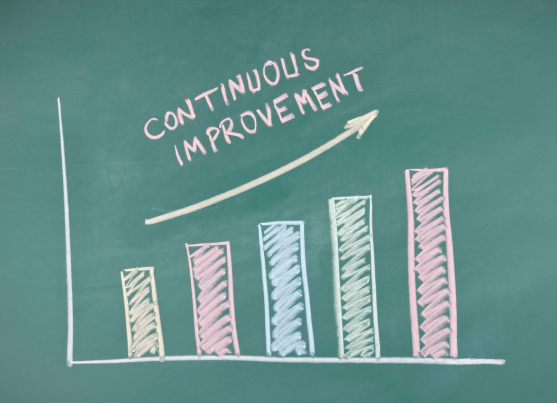
The gap between good businesses and great ones is rarely a dramatic innovation or a single transformative decision. More often, it is the accumulation of thousands of small improvements — in processes, products, customer interactions, and operational efficiency — that compound over time into substantial competitive advantage. Continuous improvement (CI) is the philosophy that no process is ever perfect, that every system can be made better, and that the organisations that embrace this truth and act on it consistently will inevitably outperform those that do not. This article explores the principles and practices of continuous business improvement and their application in competitive markets including Hong Kong.
The Philosophy of Kaizen
Continuous improvement as a formal discipline is most closely associated with the Japanese concept of kaizen — the belief that improvement should be constant, incremental, and involve everyone in the organisation, not just leadership or specialist improvement teams. Toyota’s application of kaizen principles in its production system is perhaps the most celebrated example: the company empowers every employee to identify problems and propose solutions, and its manufacturing quality and efficiency have consistently led the global automotive industry as a result.
The kaizen mindset challenges the binary choice between accepting the status quo and executing major change programmes. Instead, it identifies a third path: the continuous accumulation of small improvements that, over time, produce transformational results. For entrepreneurs who choose to open a company in Hong Kong and compete in Asia’s most sophisticated markets, embedding this improvement culture from the outset creates a compounding competitive advantage.
See also: The Benefits of Technology in Education Accessibility
Continuous Improvement in Customer Experience
Customer experience is one of the highest-leverage domains for continuous improvement. Every customer interaction — from initial awareness through purchase, onboarding, ongoing service, and support — contains opportunities to remove friction, add delight, and strengthen the relationship. Businesses that systematically measure customer satisfaction, identify the specific moments that most affect it, and continuously improve those moments build loyalty that competitors find very difficult to erode.
Implement regular customer feedback mechanisms — satisfaction surveys, interview programmes, customer advisory boards, and real-time feedback tools — and use the data they generate to drive a continuous cycle of experience improvement. Track your Net Promoter Score and other experience metrics over time, and celebrate improvements visibly with your team.
Process Improvement and Operational Efficiency
Every business process contains waste: unnecessary steps, waiting time, rework, over-processing, and complexity that adds cost without adding value. The discipline of process improvement — systematically mapping processes, identifying waste, and redesigning for greater efficiency and quality — is one of the most reliable sources of both cost reduction and quality improvement available to business owners.
Begin by mapping your most important and most problematic processes in detail. Involve the people who execute each process in identifying its inefficiencies — they almost always know exactly where the problems are. Prioritise improvement efforts by the combination of impact and ease of implementation, and measure the results of each improvement rigorously.
Product and Service Improvement
Continuous improvement extends naturally to your product and service offering. Regular, structured collection of customer feedback — through formal channels like surveys and advisory boards and informal ones like customer success conversations — generates a continuous pipeline of improvement ideas. The businesses that most effectively implement customer-driven product improvement earn the kind of deep loyalty that comes from customers feeling genuinely heard and seeing their feedback translated into tangible improvements.
Balance customer-driven improvement (making existing things better) with innovation-driven improvement (creating new solutions). Both are necessary for sustained competitiveness, but the discipline of continuous improvement ensures that your core product never becomes stagnant while innovation projects are under development.
Building a Culture of Improvement
The most enduring competitive advantage from continuous improvement comes not from any individual initiative but from the organisational culture that makes improvement habitual. This culture is characterised by a universal belief that things can always be done better, psychological safety to identify and raise problems without fear of blame, a system for capturing and prioritising improvement ideas, visible recognition for contributions to improvement, and leadership that models improvement mindset in its own behaviour.
Invest in developing this culture from the earliest days of your business. It is far easier to build improvement habits in a small team than to retrofit them into a large organisation with entrenched processes and fixed mindsets.
Measuring Improvement
Continuous improvement without measurement is continuous activity — it may not be improvement at all. Establish baseline measurements for the processes and outcomes you are targeting for improvement, track progress against those baselines rigorously, and share results transparently with the team. Visible progress against improvement goals motivates further effort; the inability to demonstrate improvement reveals that interventions are not working and must be redesigned.
Conclusion
Continuous improvement is not a programme — it is a philosophy that, when genuinely embedded in an organisation’s culture, creates a self-reinforcing cycle of growth and competitive advantage. The businesses that commit to never being satisfied with good enough — that see every process, every product, and every customer interaction as an opportunity to be better tomorrow than they are today — are those that build the most durable competitive positions. For businesses that open a company in Hong Kong and compete in Asia’s demanding markets, this commitment to continuous improvement is both a competitive necessity and a cultural opportunity.
Frequently Asked Questions (FAQs)
Q: What is the difference between continuous improvement and innovation?
A: Continuous improvement makes existing things incrementally better through small, consistent changes. Innovation creates fundamentally new things through larger, more disruptive changes. Both are necessary and complementary — improvement sustains current performance while innovation builds future capability.
Q: What is kaizen?
A: Kaizen is a Japanese business philosophy of continuous improvement involving everyone in the organisation, from the CEO to the front line. It holds that every process can be improved, that improvement should be constant and incremental, and that the people closest to a process are best positioned to identify its inefficiencies.
Q: How do I start a continuous improvement programme in a small business?
A: Start by identifying your three to five most critical business processes. Map each process in detail, involve the people who execute it in identifying problems, prioritise the highest-impact improvements, implement changes, and measure results. Create a regular rhythm — monthly or quarterly — for reviewing improvement progress and identifying new priorities.
Q: How does continuous improvement affect customer satisfaction?
A: Continuous improvement directly addresses the friction points, inconsistencies, and gaps that reduce customer satisfaction. Businesses that systematically identify and eliminate these issues deliver progressively better customer experiences, which drives loyalty, referrals, and premium pricing ability.
Q: What metrics should I track for continuous improvement?
A: Focus on metrics that directly reflect customer value and operational efficiency: customer satisfaction scores, first-time resolution rates, process cycle times, defect rates, employee productivity measures, and unit economics. Baseline each metric before beginning improvement efforts and track progress rigorously.