
ByJohn A
Fitting a Cold Plunge Into a Small Backyard: Common Questions Answered
A single-person cold plunge tub typically needs a footprint of just 3 to 5 square feet, plus 12 to 24 inches of clearance around the chiller for airflow and service access, which means most setups fit into a space as small as roughly 6 by 6 feet including room to step in and out comfortably. The real constraint on a small lot usually comes from the chiller’s ventilation needs and local property line setback rules rather than the size of the tub itself.
How Much Actual Floor Space Does a Cold Plunge Need?
The tub itself, for a single-person round or oval model, generally has a diameter or footprint of 3 to 5 feet. Add the chiller, usually a separate unit roughly the size of a large cooler or small mini-fridge, sitting a foot or two from the tub with clearance on its intake and exhaust sides. Factor in a small landing area to step in and out safely, ideally non-slip decking or pavers rather than bare grass or gravel that gets tracked into the water. All told, a compact but comfortable layout fits in a 6 by 6 foot area, smaller than most standard patio dining sets. Measure the actual path to the spot too, not just the final footprint; a tub or barrel that has to come through a narrow side gate or up a tight stairway needs that clearance checked before delivery, since a unit that arrives assembled cannot always be tilted or squeezed through a gap the way flat-packed furniture can.
Can a Cold Plunge Go on a Small Patio or Balcony?
A patio at ground level generally works well as long as it can support the filled weight, 700 to 1,200 pounds concentrated in a small footprint, which most concrete patios handle without issue. A balcony is a different question entirely: elevated structures have specific load ratings, and a filled tub’s concentrated weight can exceed what a balcony was designed to carry, especially on older buildings. Anyone considering a balcony placement should have the structure’s load rating confirmed before ordering rather than assuming it will be fine because patio furniture has always been fine. A structural engineer’s opinion on an older balcony is a modest expense next to the cost of a repair if the concentrated weight turns out to be more than the structure was built for.
Does It Need to Sit Against a Fence or Wall?
There’s no requirement that it does, but placing a tub against a fence or wall on one side is a common way to save space in a small yard, as long as that side isn’t also where the chiller needs its clearance. Positioning the chiller-facing side toward open space and the opposite side toward a fence is usually the more space-efficient layout than trying to tuck the whole unit into a corner, which can starve the chiller of airflow on two sides at once.
What If There’s No Room for a Separate Chiller Box?
Some compact and all-in-one tub designs integrate the chiller into the tub’s base or an attached cabinet rather than requiring a separate freestanding unit, which trades a bit of ventilation efficiency for a smaller overall footprint. These integrated designs still need airflow, just concentrated around the built-in housing instead of a separate box, so checking the specific clearance requirements for an integrated model matters just as much as it does for a separate chiller. They tend to cost somewhat more than a comparable tub-plus-external-chiller setup, given the added engineering to fit everything into one footprint.
Can a Cold Plunge Share Space With Other Backyard Features?
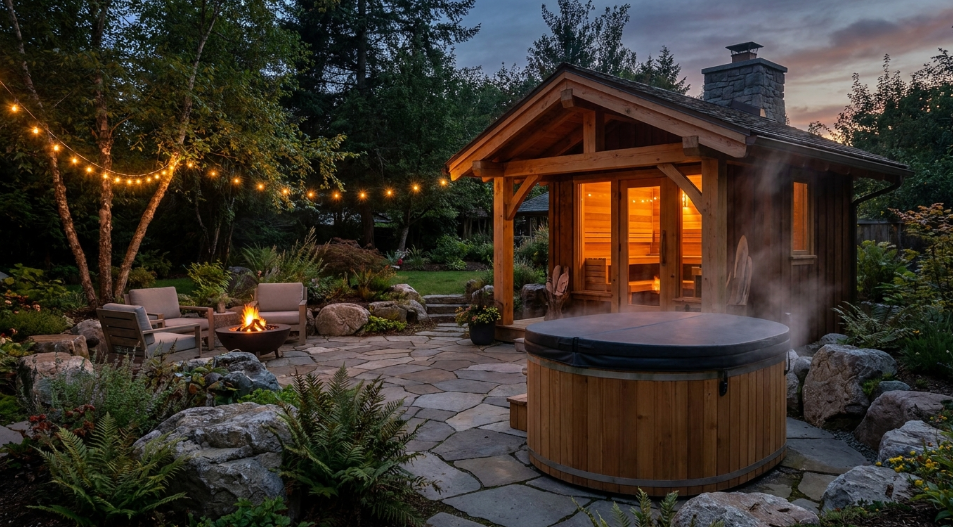
Pairing a cold plunge with an existing hot tub or a small sauna is common and space-efficient, since the two get used together for contrast routines and can share a deck or patio area rather than needing separate zones. The main planning consideration is keeping the cold plunge’s electrical circuit and the other feature’s circuit properly separated per code, and making sure foot traffic between the two doesn’t track excessive water or debris into either one. A small yard with one dedicated wellness corner, rather than features scattered across the space, tends to use square footage more efficiently overall. A simple privacy screen or a run of tall potted plants around that corner can also do double duty, softening sightlines from neighboring yards while breaking direct wind that would otherwise make a chiller work harder to hold its target temperature on a cold or breezy day.
Where Should You Start Looking Once You Know Your Space?
Once the available footprint and clearance needs are mapped out, the next step is comparing compact and integrated-chiller models against that space rather than falling for a listing photo that doesn’t specify dimensions. SweatDecks and a handful of other specialty retailers list footprint and clearance specs directly on their product pages, which is the fastest way to rule out anything too large for a tight yard before spending time on it.
Does a Smaller Tub Change What the Recovery Evidence Says?
Tub size does not appear in any of the research behind cold-water immersion recovery claims; what matters in the studies is water temperature and immersion duration, both achievable in a compact single-person tub just as well as a larger multi-person one. A 2012 Cochrane review associating cold-water immersion with reduced perceived soreness used single-immersion protocols that a small backyard tub replicates easily, and a 2023 meta-analysis in Frontiers in Physiology on post-exercise recovery drew from similarly individual-scale trials. A 2025 systematic review and meta-analysis in PLoS One pooling broader wellbeing outcomes found mixed results regardless of setup size. Fitting a cold plunge into a tight footprint is a space and installation question, not a question of losing any evidence-backed benefit compared with a larger unit.
Frequently Asked Questions
What is the minimum backyard space needed for a cold plunge? Roughly 6 by 6 feet for a single-person setup, covering the tub footprint, chiller clearance, and a small landing area to step in and out.
Can a cold plunge sit on a balcony? Only if the balcony’s load rating supports the filled weight, generally 700 to 1,200 pounds concentrated in a small footprint, which should be confirmed before ordering.
Do all-in-one chiller tubs save space? Yes, integrated designs skip the separate chiller box, though they still need airflow clearance around the built-in housing and typically cost more than a separate-chiller setup.
Can a cold plunge sit next to a hot tub or sauna? Yes, and it’s a common pairing for contrast routines, as long as each feature has its own properly separated electrical circuit per code.
References
- Effects of cold-water immersion on health and wellbeing: A systematic review and meta-analysis, PLoS One, 2025
- Effects of cold water immersion after exercise on fatigue recovery and exercise performance: meta analysis, Frontiers in Physiology, 2023
- Cold-water immersion (cryotherapy) for preventing and treating muscle soreness after exercise, Cochrane Database of Systematic Reviews, 2012
